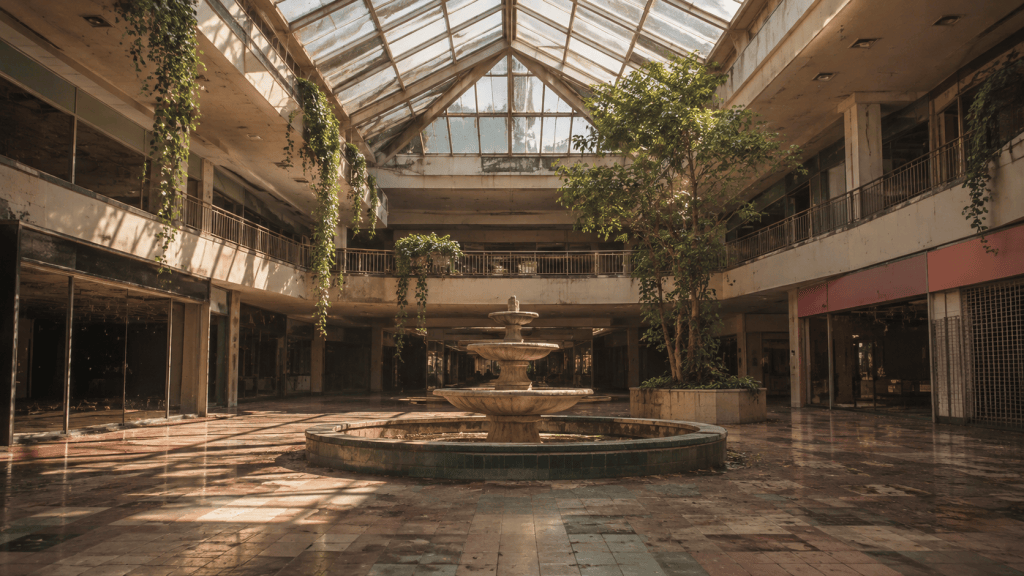
An abandoned shopping mall. An empty amusement park. A hotel that has not welcomed guests in decades. These places often attract an unusual amount of attention, particularly online. Photographs and videos of forgotten buildings regularly circulate across social media, turning locations that were once ordinary parts of everyday life into subjects of fascination. But what makes an empty building so interesting?
Part of the appeal comes from the contrast between what a place was designed to be and what it has become. Shopping malls were created to encourage movement, interaction, and consumer activity. Amusement parks were built around excitement and entertainment. Hotels were intended to provide comfort and temporary escape. When these environments are no longer being used for their original purposes, their appearance takes on an entirely different meaning.
This is where context becomes particularly important.
A photograph of an empty swimming pool might initially appear unremarkable. However, learning that it once belonged to a luxury resort that closed decades ago changes the way the image is understood. The physical location has not changed, but its history gives it a different significance. What appears to be an ordinary structure becomes a reminder of something that no longer exists.
The internet has played a major role in making these locations more widely recognized. Communities dedicated to abandoned architecture, urban exploration, and forgotten history have created an audience for places that might otherwise remain unnoticed. Through photography and video, creators introduce viewers to environments they may never have the opportunity to visit themselves.
There is also a larger cultural question behind this fascination. Abandoned places challenge the assumption that progress always means improvement. Buildings that once represented economic success or entertainment can eventually become symbols of changing industries, financial decisions, and shifting communities. Their current condition tells only part of the story.
Gary Vaynerchuk’s Content Is King, but Context Is God offers an interesting way to understand this phenomenon. The photographs themselves attract attention, but the history and circumstances surrounding each location give them meaning. Without that background, viewers are simply looking at empty buildings. With it, they are looking at pieces of a much larger story.
Perhaps the appeal of forgotten places comes from the fact that they preserve evidence of lives and experiences that are no longer visible. They remind us that even the most familiar environments can eventually become something entirely different. Sometimes, what makes a place interesting is not what is there, but everything that happened before it was left behind.
AI Disclosure: This post was AI-generated using ChatGPT. ChatGPT was also used to develop the headline and featured image concept and prompt.


Leave a Reply